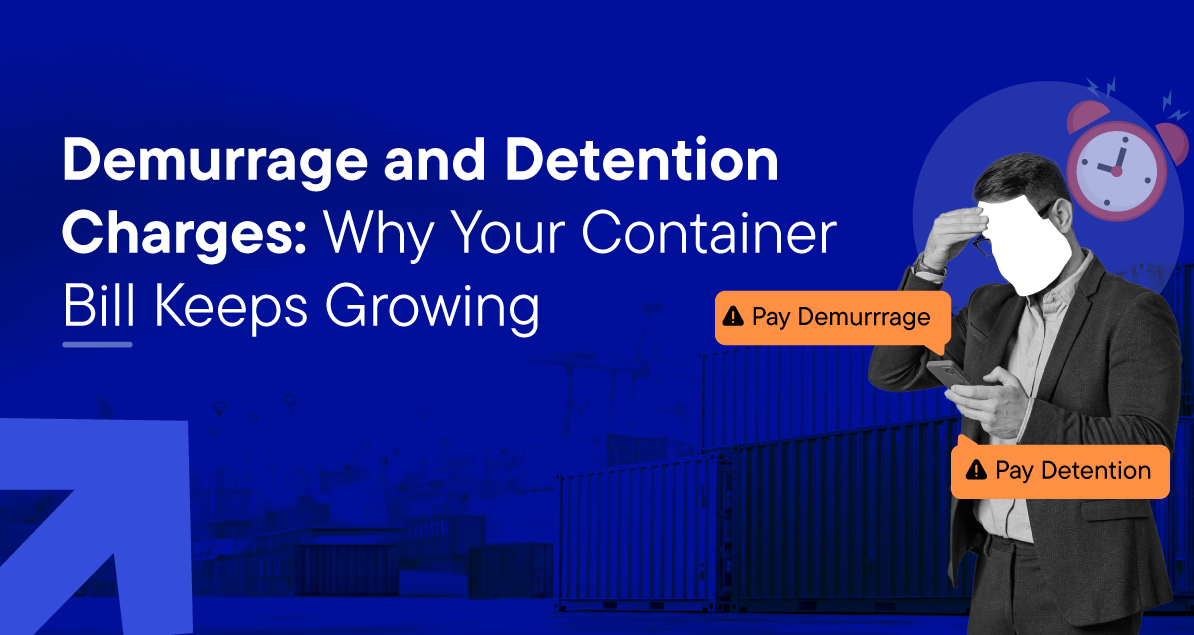
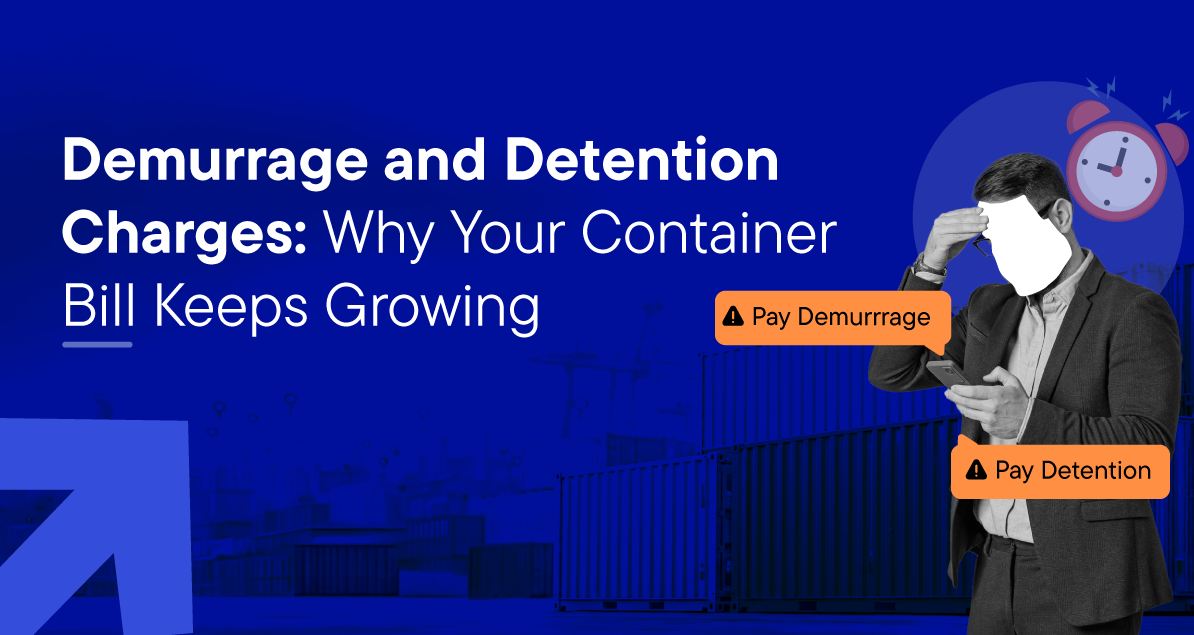
Demurrage and Detention Charges: Why Your Container Bill Keeps Growing
Let’s guess what’s going on right now. Your container has landed, and instead of being delivered, it’s sitting somewhere.
Every day, the bill goes up.
Your forwarder or carrier mentioned “demurrage” or “detention,” and you’re not sure what either one means or why you’re paying for it.
This is one of the most common surprises in shipping to and from the USA, and the charges almost always come from a specific, fixable reason.
In this blog, we’ll explain what these two charges are, why they keep growing, and how to stop them.
Demurrage vs. Detention: What’s the Difference?
People use these two words as if they mean the same thing. They don’t. Both are daily charges for a container that stays somewhere too long, but the location is different.
A simple example: Your container lands at a US port and you get 4 free days to pick it up. On day 6, it’s still sitting there. You’re now paying demurrage for 2 days. Once you pick it up, you get a few more free days to unload it and return the empty container. If you return it late, detention starts.
If you’ve read our post on accessorial fees, you’ll recognize both of these as extra charges that sit outside your base shipping rate.
Why Do These Charges Keep Growing?
Here’s why the bill climbs faster than most people expect:
- They’re charged per day, per container. Two containers sitting for five days means ten days of charges.
- The daily rate often goes up over time. Many carriers use tiers, so day 6 costs more than day 1, and day 10 costs more than day 6.
- Weekends and holidays usually count. Free time runs on calendar days, not working days. A container that arrives on a Friday can lose a good part of its free time before anyone is back at a desk.
- Free time is shorter than people think. It’s often only a few days, and it starts when the container is available at the port, not when you find out it has arrived.

Common Reasons You Get Charged
Almost every demurrage or detention bill traces back to one of these:
Notice that most of these have nothing to do with the cargo itself. They’re about timing and paperwork.
How Much Can It Cost?
It depends on the carrier, the port, the container size, and how many days have passed.
Daily rates often start modestly and then climb in steps, so a few extra days can turn into a bill much larger than the original delay suggested.
The exact numbers are in your carrier’s tariff, so ask for them before your shipment arrives, not after.
How to Reduce or Avoid Demurrage and Detention
Once you know the causes, most of these charges are preventable:
- Ask for your free days upfront. Know how many you get at the port and how many you get with the container.
- Get your paperwork ready before the shipment lands. Customs delays are the biggest reason free time disappears.
- Book your trucker early. Line up pickup before the container arrives, not after.
- Confirm the delivery address can receive the container. Check access, unloading space, and who will be there.
- Plan the empty return. Know where and when it needs to go back.
- Ask about a waiver if the delay wasn’t your fault. Carriers sometimes reduce charges for documented causes like terminal closures or port issues, but you have to ask, and the sooner the better.
How a Freight Forwarder Helps
Why track free days, trucker bookings, customs filings, and return deadlines yourself, when an international freight forwarding company can handle all of it for you?
Air 7 Seas has handled over 1 million shipments to and from the USA across 150+ countries. Customs clearance is done in-house, so the same team managing your shipment is also filing your customs paperwork.
That means fewer handoffs, fewer holds, and fewer days of free time lost to waiting on someone else. If something does go wrong, there’s one company to call, not two.