What's the Difference Between Total Loss and All Risk Insurance for Shipping?
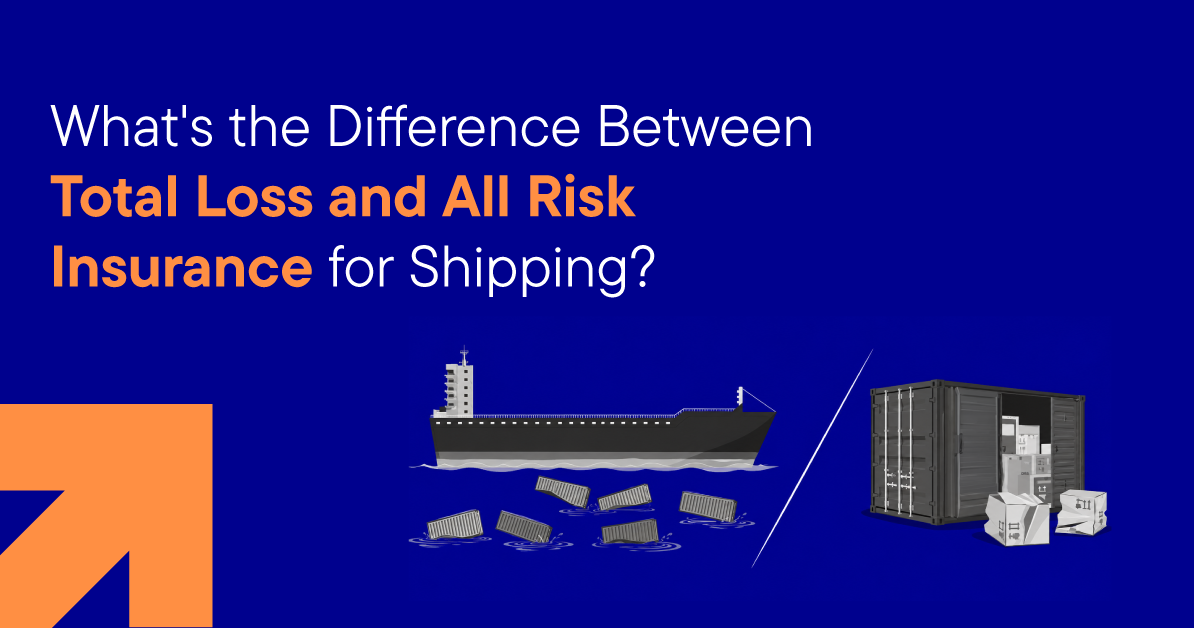
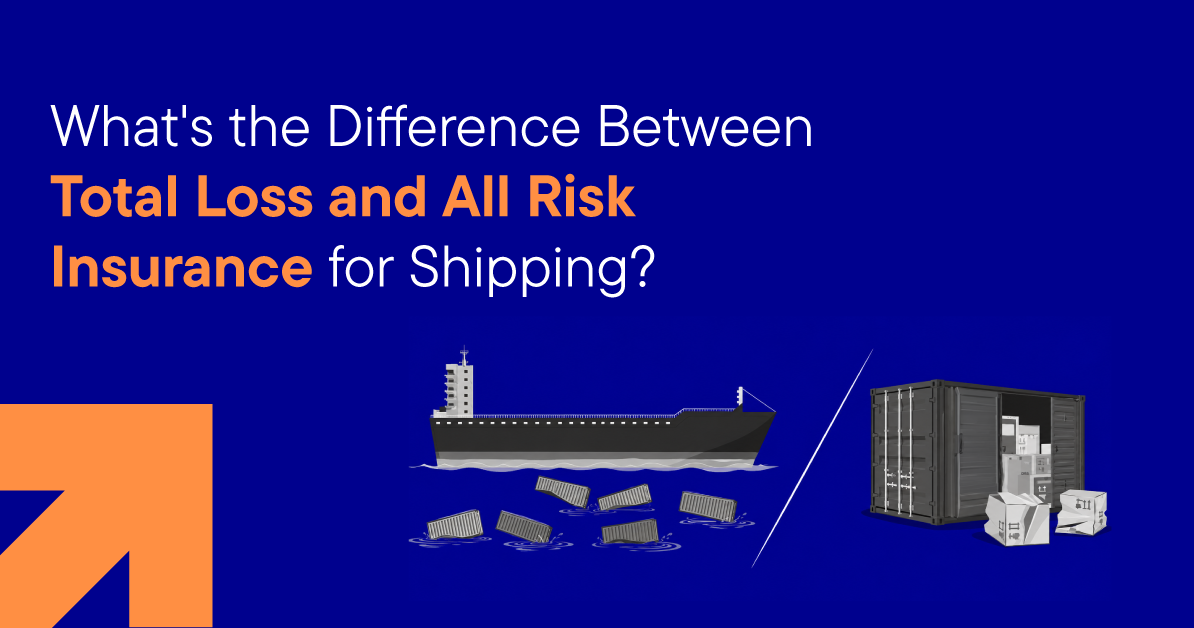
You've probably seen the reels — massive waves hit a cargo ship, containers topple like dominoes, and dozens of them disappear into the sea. It happens more than people realize.
Now imagine your shipment was in one of those containers. Would your insurance actually cover it?
Here's the catch: Total Loss insurance would pay out for that scenario — but it wouldn't cover the box that just showed up broken from normal handling.
That's the real difference between Total Loss and All Risk insurance, and most people don't find out which one they have until something actually goes wrong.
In this blog, we'll break down what each type covers, what it doesn't, and how to pick the right one before you ship.
What Is Total Loss Insurance?
Total Loss insurance only pays out when your entire shipment is lost or destroyed — think a container that falls overboard, a ship that sinks, or a fire that wipes out everything inside. If your shipment technically arrives, even badly damaged, Total Loss coverage usually won't pay a cent.
It's the cheaper of the two options, which is part of why people choose it — but it's built for worst-case, all-or-nothing scenarios.
It won't help with a cracked mirror, a water-damaged box, or a dented appliance. Those situations fall outside what this policy is designed to cover.
What Is All Risk Insurance?
All Risk insurance covers loss or damage to individual items, not just the entire shipment. If one box gets crushed, a piece of furniture gets scratched, or something goes missing during handling, this is the coverage that pays out.
It costs more than Total Loss insurance, but it protects against the situations that actually happen most often — not the rare, catastrophic ones.
For most household shipments, this is the coverage doing the real work, since day-to-day damage is far more common than a container ending up at the bottom of the ocean.
Side-by-Side: What Each One Actually Covers
The pattern is simple: Total Loss only responds to the shipment as a whole. All Risk responds to what actually happens to your things — box by box, item by item.

What Total Loss Insurance Doesn't Cover
This is where people get caught off guard. Total Loss sounds like real protection, but it only kicks in for the rare, dramatic scenario — not the everyday risks that are far more likely to happen.
It won't cover a shipment that arrives with visible damage but isn't destroyed. It won't cover mishandling at a port, a dropped box, or moisture damage from a leaky container.
If your shipment technically arrives — even in bad shape — Total Loss treats that as a delivered shipment, not a loss.
For most shippers, the real risk isn't the ship going down. It's the small, everyday damage that Total Loss was never built to cover.
Which One Should You Choose?
- Shipping high-value or fragile items? All Risk is worth the extra cost — it's the coverage that actually responds to breakage, scratches, and missing items, which are far more common than a total loss.
- Shipping low-value, replaceable items? Total Loss might be enough, since you're less likely to file a claim over minor damage anyway.
- Not sure how much your shipment is worth? That's usually a sign you should lean toward All Risk — the cost difference is small compared to what you'd lose without it.
- Shipping internationally, especially by ocean freight? All Risk is almost always the safer choice, since handling, transfers, and time at sea all add up to more chances for partial damage.
How Much Does Each Type Cost?
Both are typically priced as a percentage of your shipment's declared value, not a flat fee. Total Loss coverage costs less since it only pays out in rare, catastrophic situations.
All Risk costs more, but it's covering a much wider range of real-world scenarios — which is why most shippers find it pays for itself the first time something actually goes wrong.
The exact percentage varies by shipment type, destination, and declared value, so it's worth getting a specific number for your shipment rather than assuming a flat rate.
Ready to Protect Your Shipment the Right Way?
Most damage claims aren't about ships sinking — they're about the everyday bumps, drops, and handling that happen along the way. Choosing the right insurance means understanding what you're actually protected against, not just assuming you're covered.
Air 7 Seas walks every shipper through their insurance options based on what they're actually shipping — so you know exactly what's covered before something happens, not after.
Frequently Asked Questions
1) Is All Risk insurance worth the extra cost? For most shipments, yes. All Risk covers the everyday damage that actually happens — a dropped box, a scratched item — while Total Loss only responds to rare, catastrophic events.
2) Does Total Loss insurance cover theft? Only if the entire shipment is stolen. Partial theft — like one item missing from a shipment that otherwise arrives — typically isn't covered under Total Loss.
3) Can I switch insurance types after booking my shipment? Usually yes, as long as it's before your shipment departs. Once it's in transit, you're locked into whatever coverage was selected at booking.
4) What happens if I have no insurance at all? You're fully responsible for any loss or damage yourself. Most forwarders offer at least Total Loss coverage as a baseline, but it's not automatic — you have to ask for it.
5) Which one does Air 7 Seas recommend? It depends on what you're shipping, but for most household goods and higher-value items, All Risk is the coverage that actually protects you in the situations most likely to happen.