Incoterms Explained: EXW vs. FOB vs. DDP, Which Should You Use?

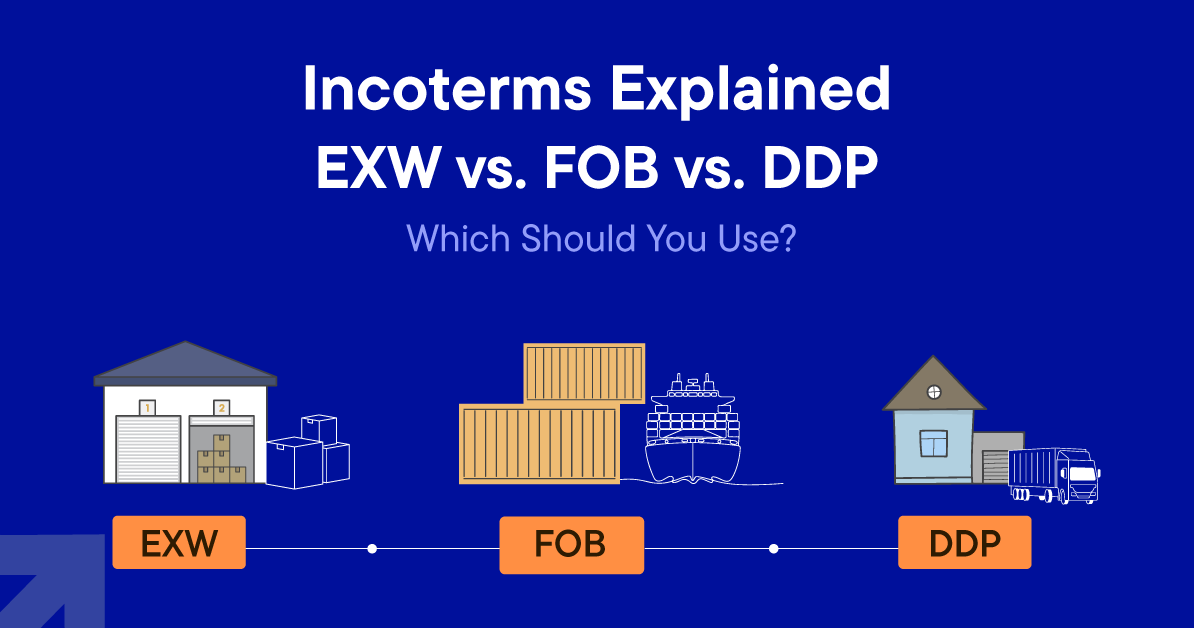
If you’re buying goods from another country to bring into the USA, your supplier has probably sent you a quote with three random letters on it: EXW, FOB, or DDP.
Nobody explained what they mean, but they decide who pays for what. Get it wrong, and you could end up paying for things you thought your supplier had covered.
In this blog, we’ll explain all three in simple words, with an example, so you know which one to pick.
What Is an Incoterm?
An Incoterm is a three-letter code that tells the buyer and the seller who is responsible for what during a shipment.
It covers:
- Who pays for each part of the journey (trucking, shipping, customs, duties)
- Who takes the risk if something gets damaged or lost along the way
Think of it as a dividing line. On one side of the line, the seller handles and pays. On the other side, you do. The only difference between EXW, FOB, and DDP is where that line sits.
The 3 Incoterms in One Line Each
One Example, Three Ways
Let’s say you own a small store in Texas, and you’re buying $10,000 worth of spices from a supplier in Mumbai, India.
Here’s how the same order works under each Incoterm.
EXW (Ex Works)
Your supplier packs the spices and keeps them ready at their warehouse in Mumbai. That’s where their job ends. You arrange the truck to the port, the export paperwork in India, the ocean shipping, US customs, and delivery to Texas. You have the most control, but also the most work.
FOB (Free On Board)
Your supplier packs the spices, trucks them to the port in India, clears them for export, and loads them onto the ship. Their job ends there. From that point, you pay for the ocean shipping, US customs and duties, and delivery to Texas. It’s a middle ground.
DDP (Delivered Duty Paid)
Your supplier takes care of everything, including shipping, US customs, and duties, and delivers the spices to your door in Texas. All you do is receive them. It’s the easiest option, but the price they quote you is higher because they’re covering all of it.
Who Pays for What?
The further right you go, the less you do. The further left you go, the more control you have.
Which One Should You Use?
For a first-time importer into the USA, here’s a simple way to think about it:
- Choose FOB if you want a balance. Your supplier handles everything in their own country, which they know best, and you handle the shipping and US side with a freight forwarder. This is a popular choice for first-timers.
- Choose EXW if you want full control and clear cost visibility, and you’re working with a forwarder who can handle pickup and export paperwork in the other country. It’s more work, so it isn’t usually the best starting point.
- Choose DDP if you want the easiest experience and you’re happy to pay more for it. Just check what your supplier is actually including, because a single “all-in” price can hide costs you can’t see.
3 Mistakes First-Time Importers Make
1. Thinking EXW is always the cheapest
The supplier’s price looks low, but you’re now paying for everything else. Add up the full cost before you compare quotes.
2. Not agreeing on the exact location
“FOB” alone isn’t enough. It should say which port, like “FOB Mumbai.” Otherwise, two people can read it two different ways.
3. Not checking what DDP really includes
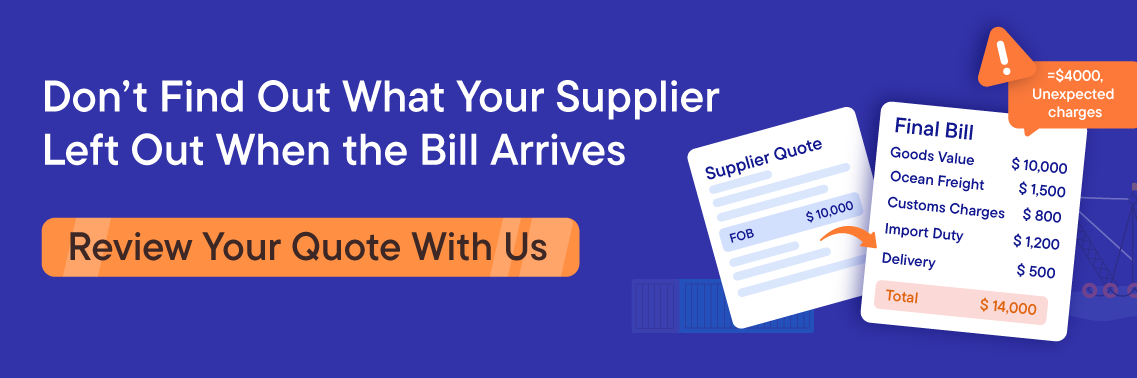
If a supplier says DDP, confirm in writing that duties, customs, and delivery are all covered. If something is missing, you’ll find out when the bill arrives.
How a Freight Forwarder Helps
Whichever Incoterm you choose, someone has to handle the shipping and customs steps in between.
Why figure out pickup, ocean freight, and US customs on your own, when an international freight forwarding company like Air 7 Seas can handle all of it for you?
Air 7 Seas has moved over 1+ million shipments to and from the USA across 150+ countries, with over 40+ years in business.
Customs clearance is done in-house, so the same team moving your goods also files your paperwork. Whether you pick EXW or FOB, we handle everything on your side of the line.
Frequently Asked Questions
1) What does Incoterm stand for?
It’s short for International Commercial Terms. They’re a set of standard rules used worldwide so buyers and sellers understand who is responsible for what.
2) Which Incoterm is the best for beginners?
FOB is a common starting point because the supplier handles things in their own country, and you handle the rest with a forwarder. DDP is the easiest, but it usually costs more.
3) Does the Incoterm change how much duty I pay?
The duty itself depends on your goods, their value, and where they were made. The Incoterm decides who pays it. Under DDP, the seller pays it. Under EXW and FOB, you pay it.
4) Where do I find the Incoterm for my order?
It should be written on your quote, your purchase order, and the commercial invoice. If it isn’t, ask your supplier to add it.
5) Can I change the Incoterm after I agree to it?
Yes, but it’s easiest to do before you place the order, since a different Incoterm changes the price and who does what.