What Is the Cheapest Way to Ship a Few Boxes Overseas?
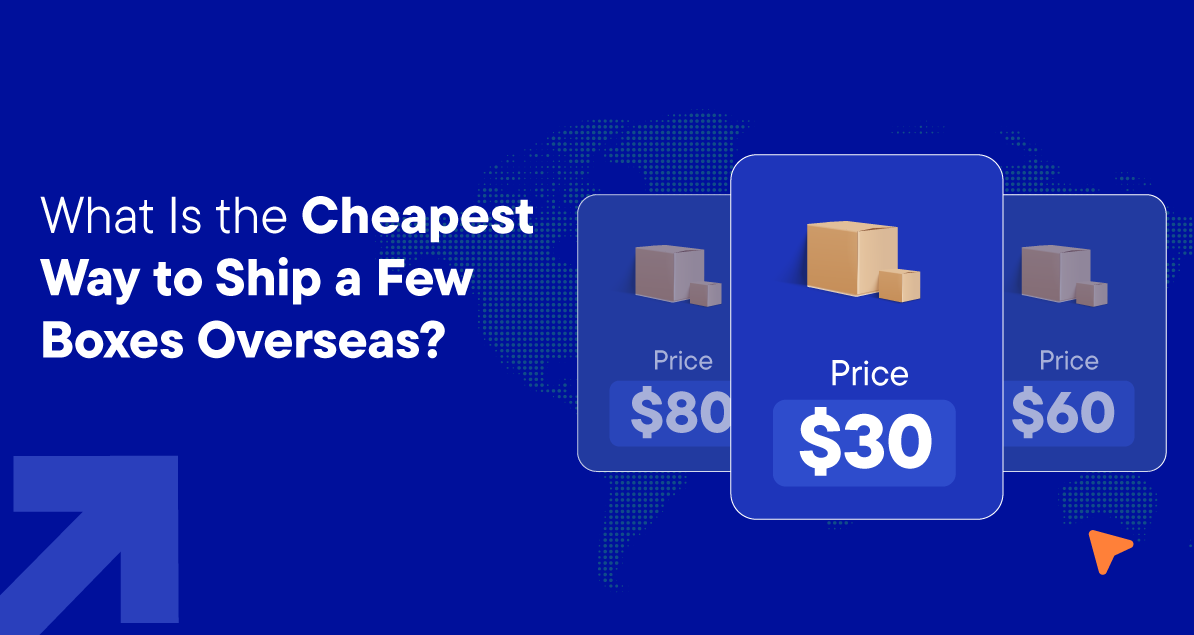
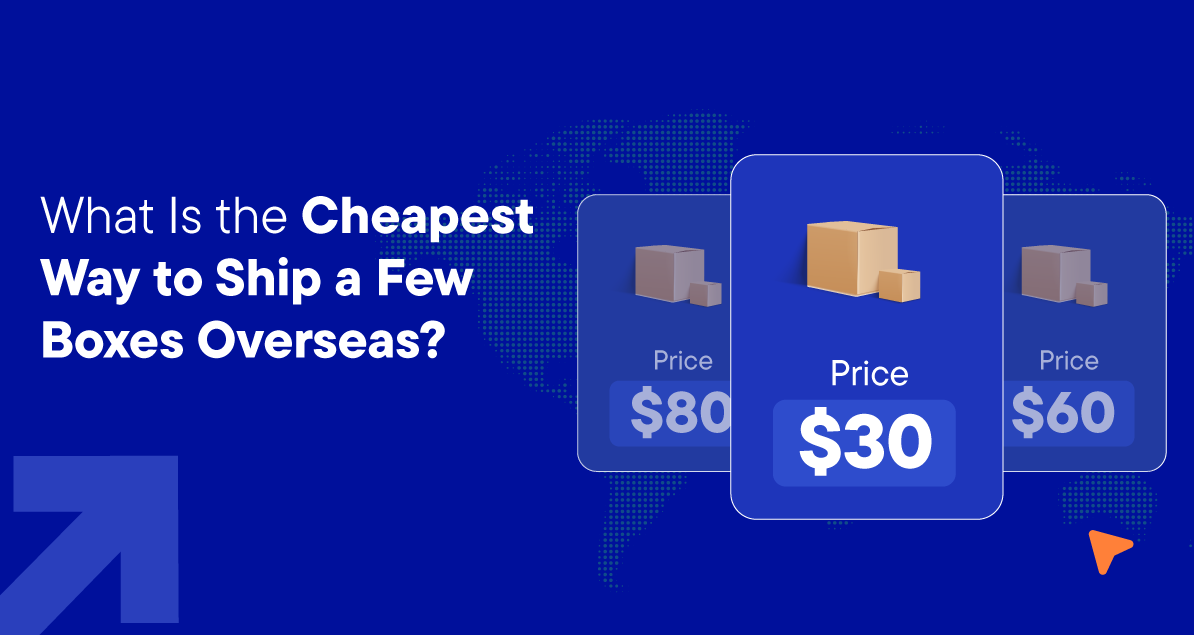
Let’s guess what’s going on right now. You’ve only got a few boxes to ship to or from the USA, and every quote you’ve seen is for a whole container.
That feels like paying for a bus when you only need a seat. Here’s the good news: you don’t have to book a full container.
There are cheaper ways to ship a small load, and the best one depends on how much you’re sending.
In this blog, we’ll walk through each option in plain words, so you can pick the one that makes sense for you.
First, Why Does a Small Shipment Feel So Expensive?
Because a full container is priced as one big block of space, whether you fill it or not. If you only have 8 boxes, you’d be paying for a lot of empty air.
The fix is simple: stop paying for space you aren’t using. And there are a few ways to do that.
Your Options for Shipping a Few Boxes Overseas
Let’s go through them one by one.
Postal service
If you’re sending one or two light parcels, the post office can be cheap. But there are weight limits, tracking can be patchy, and it’s not built for heavy boxes.
Courier
Fast and easy for a handful of small boxes. The cost per kilo climbs quickly though, so it stops making sense once the boxes get heavy.
Air freight
Quick, but you’re paying for speed. It works for small, valuable, or urgent items, not for a pile of household boxes.
Shared container (LCL)
This is the one most people miss. Your boxes travel in a container with other people’s goods, and you only pay for the space you use. For a few boxes up to a small household, this is usually the cheapest way to go overseas by ocean.
Full container
Worth it when you have enough to fill most of it, like a full home. If you don’t, you’re paying for empty space.
What Is LCL, in Simple Words?
LCL stands for “Less than Container Load.” Think of it like carpooling. A freight company collects boxes from several shippers, packs them into one container together, and ships it.
Everyone splits the cost, so each person pays only for their share.
At the other end, the container is opened at a warehouse, the boxes are separated, and each person’s goods go through customs and get delivered.

A Simple Example
Let’s say you’re moving from Texas to India with 8 boxes and a few bags, which takes up about 2 cubic meters.
- Full container: You’d pay for the whole container, even though your boxes fill a small corner of it.
- Shared container (LCL): You’d pay for roughly 2 cubic meters of space, plus the handling charges.
For a load this size, shared almost always costs less. It does take longer, because the shipping company waits to fill the container with other people’s goods before it sails.
How Is LCL Priced?
LCL is usually charged by the space your boxes take up, or by weight, whichever is bigger. Space is measured in cubic meters, often shortened to CBM.
A lot of shippers also have a minimum charge, so even one tiny box costs something.
Here’s the part new shippers don’t expect: the shipping rate isn’t the whole bill. Extra charges can show up, such as handling at the warehouse, document fees, and customs clearance.
We covered these in our post on accessorial fees, and it’s worth a read before you compare quotes.
7 Ways to Spend Less on a Small Shipment
- Ship less. Sell, donate, or give away anything that’s cheaper to replace than to ship.
- Pack tight and use the right size boxes. Wasted space costs money when you’re charged by volume.
- Measure and weigh your boxes accurately. Wrong numbers lead to bill corrections later.
- Skip heavy, low-value items. Old furniture and cheap appliances often cost more to ship than they’re worth.
- Ask for an itemized quote. You want to see the freight, handling, customs, and any other fees separately.
- Book early. Last-minute shipments cost more, and you have fewer options.
- Check what you can’t ship. Banned or restricted items can get your shipment stopped, and that costs you far more than leaving them behind.
Is a Shared Container Safe?
It’s safe, but your boxes get handled more often, since they’re loaded, unloaded, and sorted along the way. So pack well, and don’t skip insurance.
For a shared container, All Risk coverage is worth considering, because it covers the everyday bumps that Total Loss insurance doesn’t.
We explain the difference in our post on Total Loss vs. All Risk.
What About Customs and Duty?
Your goods still go through customs in the destination country. Used personal items are usually treated more gently than new items or items for sale, but the rules depend on the country.
If you’re shipping into the USA, our post on bringing household goods in with less duty explains how to keep that cost down.
Why Sort This Out Yourself When Air 7 Seas Can Do It for You?
Why compare couriers, work out cubic meters, and chase customs paperwork on your own, when an international freight forwarding company like Air 7 Seas can handle all of it for you?
Air 7 Seas has moved over 1+ million shipments to and from the USA across 150+ countries, with 40+ years in business and a 4.4 Google rating.
We’ve handled everything from a few boxes to a full multi-room home, including over 500 shipments between India and the USA. Customs clearance is done in-house, and every quote is itemized upfront, so you’ll always know what you’re paying before you book.
If you’re not sure where to start, we’d be glad to look at what you’re shipping and help you choose the right option.
Frequently Asked Question
- What is the cheapest way to ship a few boxes overseas?
For a small load by sea, a shared container (LCL) is usually the cheapest. For one or two light parcels, the postal service or a courier can cost less.
- How many boxes do I need to make a shared container worth it?
There’s no fixed number, because it depends on box size and weight. Many shippers have a minimum charge, so a single small box often works better by courier. A few boxes and up is where shared containers start to make sense.
- Is shared container shipping slower than a full container?
Usually, yes. The shipping company waits to fill the container with other shipments before it sails, and your boxes also go through an extra step at the destination warehouse.
- Can I ship household goods in a shared container?
Yes. Many people ship a small household this way, from a few boxes up to a one-bedroom home.
- Do I still need to pay customs duty on a small shipment?
Customs applies to small shipments too. Whether duty is charged depends on the items, whether they’re used, and the destination country’s rules.